
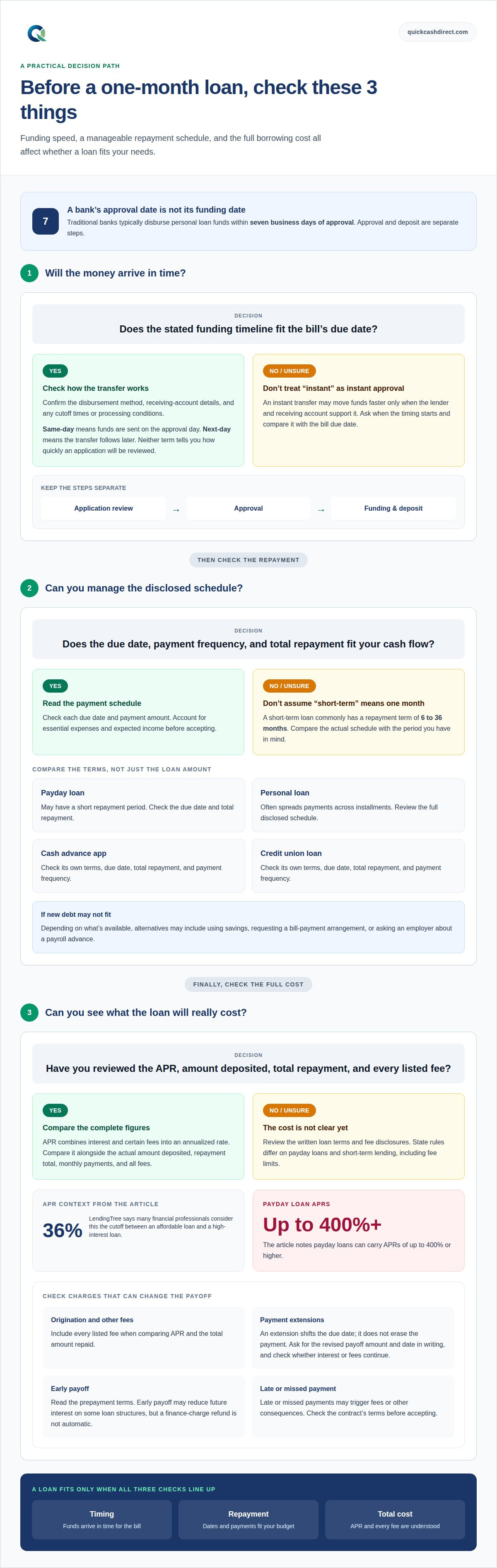
A one-month deadline can arrive before traditional bank funding does. Banks typically disburse personal loan funds within seven business days of approval, so a small loan for one month may not work if you need money sooner. Approval and deposit are separate steps, and both affect whether a loan meets your needs.
It makes sense to focus on speed when a bill is urgent. But the repayment date and total cost matter just as much: a quick decision won’t help if the payment is difficult to manage.
This guide explains what affects processing time, how repayment terms work, and how APR, origination fees, and other charges can change the total cost. Use these details to compare your options and understand the trade-offs before you borrow.
Key Takeaways
- Separate approval from funding, and account for how processing steps affect when money reaches you.
- Match the repayment date and schedule to your expected cash flow before accepting a short-term loan.
- Compare APR and every fee together to understand the full borrowing cost, not just the amount due upfront.
- Use a worked example to see how a fee and repayment period can change the effective cost of borrowing.
How long does it take for a loan to process?
Traditional banks typically disburse personal loan funds within seven business days of approval. Credit score and income requirements vary, but lenders generally assess income, existing obligations, and ability to repay.
Application Processing Time
Processing begins when you submit an application for the lender to review. Provide accurate income and bank information, and respond promptly if the lender requests clarification. Missing details can delay the review and decision.
Your credit score and income can affect approval decisions and loan terms. Lenders may consider regular income and current repayment obligations alongside credit history. Before applying, review the requirements and make sure the requested amount fits your budget. A complete application can support a smoother review, but approval and funding are separate steps.
Funding and Disbursement Methods
After approval, the lender sends the funds using the selected disbursement method. Direct deposit puts money into a bank account, while other methods may involve additional processing steps. Check which method applies and confirm that the account details in your application are correct.
Approval does not mean the funds are already available to spend. The sending institution and receiving bank both affect the transfer. Review the loan terms for the funding method and repayment schedule before accepting an offer.
Instant Transfer Availability
An instant transfer can move funds faster than standard processing when the lender and receiving account support that option. Availability depends on the payment method, participating financial institutions, and transfer processing. “Instant” describes the transfer option, not necessarily the entire application and approval process.
Check whether your account can receive the transfer and whether any conditions apply. Before accepting, confirm the amount to be deposited and the repayment date. This helps distinguish a fast transfer from a fast decision.
Same-Day and Next-Day Funding
Same-day funding means funds are sent on the day an application is approved; next-day funding means the transfer follows later. Neither term tells you how quickly the application will be reviewed. Submission time, approval, and disbursement method all affect the timeline.
For a bill due soon, check the expected funding timeline before relying on the money. Ask whether the stated timing starts at application or approval, and note any cutoff times or processing conditions. Compare the timeline with the bill’s due date and your planned repayment.
Loan repayment terms
A one-month payoff works only if the agreement sets a due date and payment you can manage. If you’re considering a small loan for one month, check the repayment schedule before focusing on the loan amount.
One-Month Loan Options
Payday loans may have short repayment periods, while personal loans often spread payments across installments. Cash advance apps and credit union loans have their own terms. Compare each option’s due date, total repayment, and payment frequency to see whether you can repay it within a month.
A small loan for one month needs a repayment schedule that fits that period. Alternatives may include using savings, requesting a bill-payment arrangement, or asking an employer about a payroll advance. Depending on what’s available to you, these options may avoid taking on new debt.
Repayment Terms and Monthly Payments
A short-term loan commonly has a repayment term of 6 to 36 months. That range shows why “short-term” doesn’t automatically mean one month. Review payment frequency, due dates, and total owed. For an installment loan, use its disclosed schedule to see each payment and compare the total with your budget.
Before signing, account for essential expenses and expected income. A loan payment affects your finances beyond the initial deposit. On-time repayment may support your credit history if the lender reports payments to credit bureaus. Review your credit report to understand your current obligations.
Early Repayment and Finance-Charge Refunds
Before paying early, read the contract for prepayment terms and how any finance-charge refund is calculated. Early payoff may reduce future interest on some loan structures, but a refund isn’t automatic. Request the payoff amount for your planned payment date and compare it with the scheduled balance.
Confirm how the lender applies an early payment and whether any balance will remain. Keep the receipt with your agreement. If an unexpected expense disrupts repayment, contact the lender promptly and review the contract’s options rather than missing a due date.
Loan APRs, origination fees, and other borrowing costs
State rules differ on payday loans and short-term lending, including fee limits. Before sharing financial details, review the lender’s identity, written loan terms, fee disclosures, and application security.
Origination Fees and Borrowing Costs
APR combines interest and certain fees into an annualized rate, helping compare personal loans with different terms. Payday loans can carry APRs of up to 400% or higher. LendingTree says many financial professionals consider 36% the cutoff between an affordable loan and a high-interest loan. Review the actual amount deposited, total repayment, monthly payments, and every listed fee before you borrow.
Extension Fees and Payment Extensions
A payment extension changes the due date, but it can add charges or increase borrowing costs. Before agreeing, ask for the revised payoff amount and date in writing. Compare that total with the original schedule. Check whether interest continues during the extension and whether another extension would add fees. An extension shifts a payment; it doesn’t erase it.
Prepayment Penalties
Some loan agreements include a fee for paying off a balance early. Read the prepayment section before signing, then compare the early payoff amount with the scheduled balance. Ask how the lender calculates interest through the payoff date and whether a fee applies. A clear written calculation helps you judge whether early repayment will lower your actual cost.
Late and Missed Payment Fees
Late or missed payments may trigger fees or other consequences stated in the agreement. Before borrowing, identify the due date, any grace period, payment method, and returned-payment charges. If a payment may be late, contact the lender before the deadline and ask what options the contract allows. Record any agreed change in writing.
Review discounts just as carefully. An advertised rate reduction may depend on specific loan terms or payment conditions. Compare the final APR and total repayment with and without the discount, then use the written offer to decide.
Borrowing fee and APR example
Calculate the full amount due, not just the advertised percentage. Add the principal, interest, origination charges, and other required fees; avoid scams by verifying the lender’s identity and reading the complete agreement before sharing sensitive information.
Example Loan Payment
Use a payment worksheet to see how each charge affects what you owe. Start with the amount you expect to receive, then list every scheduled payment and due date. Add the payments and compare the total with the deposit. If a fee is withheld before disbursement, you may have less money to spend than the loan balance.
Illustrative Loan Costs
If a lender charges an origination fee and interest, list each charge separately and add them to the principal to estimate total repayment. Check whether the fee is withheld from the deposit or added to the balance. This affects the amount you receive, even if the amount you repay remains the same.
APR Illustrations
APR expresses borrowing costs as an annual percentage, while your actual loan term may be shorter. Compare offers using the same amount and repayment period. For example, a percentage alone won’t show the cash needed on your due date. Review the payment schedule and total repayment beside the APR before deciding whether you qualify or can manage the payments.
Calculating Total Repayment
Use this sequence: identify the principal, add interest and required fees, then total every scheduled payment. Compare that amount with the deposit you’ll receive. Check the agreement for due dates, extension charges, and costs triggered by late payment. Keep a copy of the disclosure and payment schedule, and make sure the lender’s written terms match your calculations.
For a transparent review of direct deposit loan options, compare the deposit, payment schedule, and total repayment before proceeding.
QuickCashDirect: Payday Loans
QuickCashDirect connects borrowers with lenders offering payday loans, cash advances, online payday loans, and loans for bad credit. If you need short-term borrowing, compare the repayment date and full cost with your budget. A one-month timeline works only if the agreement’s due date and payment amount fit your expected cash flow.
Before proceeding, review the loan terms and confirm the amount you’ll receive, the total repayment, and the due date. If the schedule would leave essential bills unpaid, pause and consider whether borrowing is manageable. Clear terms help you make an informed decision.
Visit QuickCashDirect to explore its loan options.
Choose a repayment plan you can carry forward
A small loan for one month should address an immediate need without creating a bigger problem at your next payday. Before committing, compare the planned payment with essential bills and income already allocated to other expenses. If repayment would force you to borrow again or delay a necessary bill, reconsider the timing or amount.
Set a clear decision point: identify the expense, decide what payment fits your budget, and read the agreement before accepting. Keep a copy of the terms so you can refer to them as the due date approaches. A deliberate choice can help you stay in control of what comes next.
If you’re ready to explore your options, contact QuickCashDirect. Take the next step at your own pace and choose a path that fits your financial priorities.
Frequently Asked Questions
Can I be charged any other fees?
Yes, a loan agreement can include fees beyond interest. Check for origination, late-payment, returned-payment, or extension charges, and note when each applies. For instance, a payment returned by your bank could trigger a charge if the agreement allows it. Compare the complete fee list with the amount you’ll receive, and keep the disclosure with your payment records.
Is there a fee for paying off the loan early?
Most lenders available through QuickCashDirect allow early payoff without a penalty, but review your specific agreement. Before paying, request the payoff amount for your intended date and check whether accrued interest or other charges remain due. Keep the payment confirmation as a record of the amount settled and any remaining balance.
What happens if I can't make a payment on time?
A missed due date can lead to charges or other consequences described in your loan agreement. Contact the lender before the payment date, explain the timing issue, and ask what options the contract allows. Don’t assume a partial payment changes the due date. Keep notes of the conversation and any written change so you can track what you owe.
Borrow only what covers the expense. If a lender’s minimum is more than you need, borrowing extra can increase what you owe without addressing another immediate need. First consider whether the biller can split or delay the payment, or whether savings can cover the gap. Compare the repayment obligation with your next expected income before borrowing.
What if I need more time to pay?
Contact the lender before your due date and ask whether the agreement allows a changed schedule. Before accepting an extension, request the revised payment dates and total amount owed in writing. A later due date can add costs or keep the balance outstanding longer. Check whether the new schedule fits your next income cycle and essential bills.
What is a finance charge?
A finance charge generally refers to costs associated with borrowing. It is separate from the principal you receive. To understand the full obligation, compare the finance charge with the amount deposited and include any other required costs. The agreement’s payment schedule shows when those amounts are due and how they’re collected.