
A loan offer deserves careful review when the amount exceeds what you need or the repayment schedule is hard to follow. These are red flags in a loan offer because unclear or unaffordable terms can make repayment difficult. The Red Flags Rules serve a different purpose: they address identity theft, not whether a loan fits your budget.
It’s reasonable to focus on how quickly you can get funds, especially when money is tight. But speed shouldn’t replace a clear review of what you’ll borrow, when payments are due, and how repayment works. The Red Flags Rules were issued under the Fair and Accurate Credit Transactions Act (FACTA) in 2003. They require covered financial institutions and creditors to maintain identity theft prevention programs. This article explains how to assess the loan amount and repayment terms, spot pressure or approval claims that deserve scrutiny, and understand what the rules are designed to prevent. Use the distinctions to assess an offer calmly before you decide.
Key Takeaways
- Borrow only what you need, and make sure the payment schedule fits your budget before accepting an offer.
- Guaranteed approval claims and pressure to act quickly deserve careful scrutiny; clear terms should come before a decision.
- Understand any fee requested before funds are disbursed, including what it covers and how it affects the total repayment.
- Read the agreement for the repayment schedule, fees, and consequences of missed payments. The Red Flags Rules address identity theft prevention, not loan affordability.
Loan amounts and repayment terms
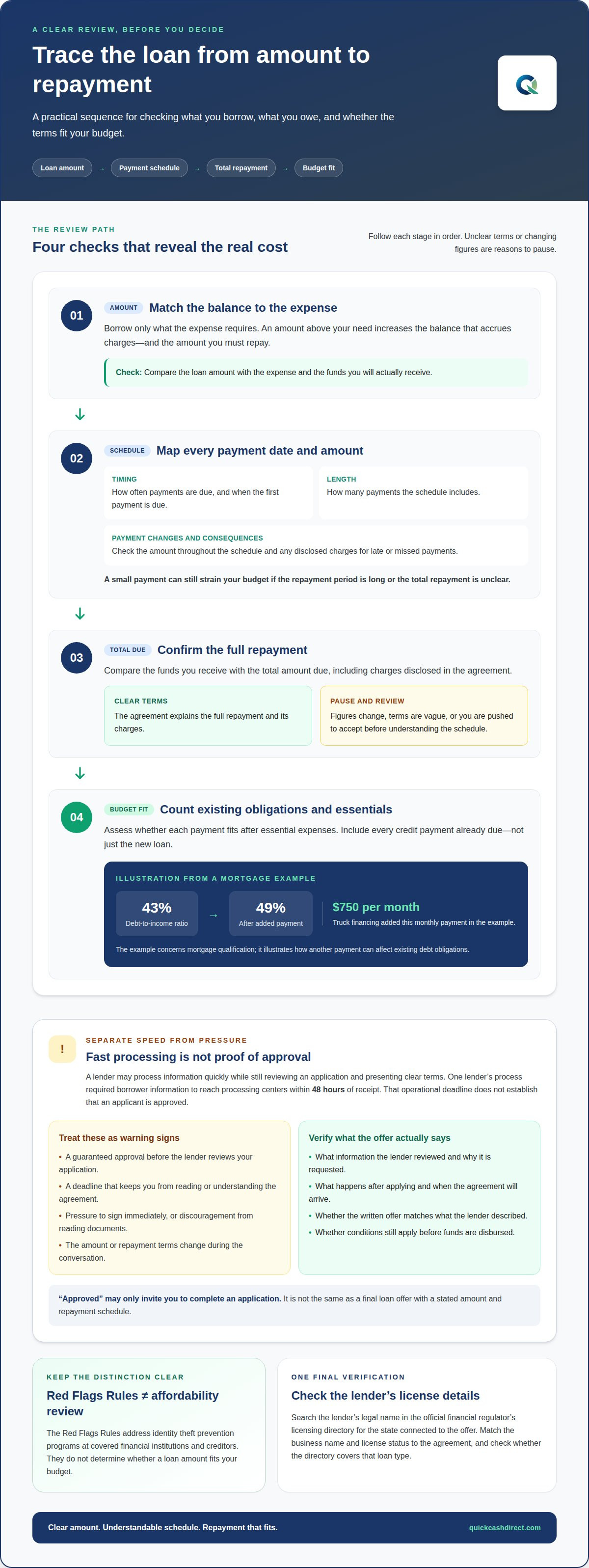
A loan amount should match the expense, not exceed it simply because a lender offers more. Borrowing extra increases the balance that accrues charges and the amount you must repay. Compare the funds you’ll actually receive with the total amount due, then assess whether each payment fits your budget after essential expenses.
Look beyond the payment size. Check how often payments are due, when the first is due, how many payments the schedule includes, and whether the agreement explains charges for late or missed payments. A small payment can still strain your budget if the repayment period is long or the total repayment is unclear. Treat vague terms, changing figures, or pressure to accept before you understand the schedule as red flags in a loan offer.
Existing obligations matter too. A mortgage example shows how added debt can affect qualification: financing a truck added a $750 monthly payment, and the buyer’s debt-to-income ratio rose from 43% to 49%. The example concerns a mortgage, but it illustrates why a consumer should consider every payment already due before taking on another loan.
- Amount: Make sure the requested balance reflects the actual need.
- Payment: Check the due dates, frequency, and amount throughout the schedule.
- Total repayment: Confirm the full amount due, including disclosed charges.
- Budget fit: Account for existing credit payments and essential costs.
To check whether a U.S. lender is licensed, search its legal name in the official financial regulator’s licensing directory for the state connected to the offer. Match the listed business name and license status to the agreement, and review whether the directory covers that loan type.
Keep identity checks separate from affordability. The Red Flags Rules concern identity theft prevention programs at covered financial institutions and creditors. They do not tell you whether a loan amount suits your budget. Review the amount and repayment terms on their own merits before accepting.
Are guaranteed loan approvals or pressure to act quickly warning signs?
Yes, a guaranteed approval deserves caution if it comes before the lender reviews your application. A promise of approval without assessing your information may not reflect a genuine decision about your ability to repay. Treat a deadline that prevents you from reading the terms as another reason to pause.
Speed alone doesn’t prove an offer is unsafe. A lender can process information quickly while still reviewing the application and presenting clear terms. One lender’s process required borrower information to reach processing centers within 48 hours of receipt. That operational deadline shows how quickly files can move, but it doesn’t establish that any applicant is approved.
Separate a fast process from pressure tactics. Check whether the lender explains what information it needs, what happens after you apply, and when you’ll receive the agreement. Be cautious if a representative says the offer will disappear unless you sign immediately, discourages you from reading the documents, or changes the amount or repayment terms during the conversation.
- Approval claim: Look for a clear explanation of what the lender has reviewed before offering approval.
- Urgent deadline: Notice whether the deadline limits your chance to understand the agreement.
- Changing details: Compare the written offer with what the lender described.
- Information request: Understand why the lender needs each requested detail before sharing it.
For example, a message saying “approved” may only invite you to complete an application. It isn’t the same as a final loan offer with a stated amount and repayment schedule. Don’t treat the headline as proof. Read the actual agreement and identify any conditions that still apply before funds are disbursed.
If you need to consider a different borrowing option, review quick loan options at your own pace. A sound decision leaves room to understand the amount, payment schedule, and terms before you accept. No countdown should replace that review.
Can a lender legally require upfront fees before disbursing a loan in the U.S?
There isn’t a reliable yes-or-no answer for every U.S. loan. Whether a fee can be charged before disbursement depends on the loan type and applicable rules. Don’t assume every upfront charge is unlawful, or that a lender’s request makes it valid. Start by identifying who is charging the fee, what it covers, and how the agreement describes it.
Distinguish a documented loan charge from a request to send money through a separate channel. For example, an agreement might describe a processing charge as part of the transaction, while a message demands payment to an individual account before funds are released. Those situations raise different questions. Compare the request with the written offer, and don’t rely on a verbal explanation alone.
- Purpose: Ask what specific service or transaction the charge covers.
- Recipient: Identify the business or person receiving the payment.
- Documentation: Find the charge in the loan agreement or other written disclosure.
- Disbursement: Check whether the written terms explain how the charge affects the funds you receive.
A demand for a fee by gift card, wire transfer, or cryptocurrency deserves particular caution. These payment methods can make it difficult to reverse a transfer or resolve a dispute. A lender that changes the recipient or payment method after issuing its written terms creates another inconsistency to investigate. Pause if the explanation keeps changing.
Before paying, compare the fee request with the lender’s legal name, the agreement, and the payment instructions. Keep copies of messages and documents. If the charge is absent from the written terms, ask for a written explanation before sending money. If the lender refuses to identify the fee or recipient, don’t treat urgency as proof that payment is required.
The key distinction is transparency: a clearly described charge can be evaluated, while an unexplained demand leaves essential details unresolved. Review the loan type and applicable rules, then assess the documented purpose, recipient, and payment process. Don’t send money based only on a promise that funds will follow.
What should I check in a loan agreement before signing?
Read the complete agreement, including disclosures, attached schedules, and any payment authorization. Confirm the lender’s legal name matches the name on the offer. Compare the amount borrowed with the amount you’ll receive. If a fee or deduction changes the disbursement, the document should explain it clearly.
Next, trace the repayment terms from start to finish. Find the interest rate or other finance charge, payment amount, each due date, and final payment date. Check whether the schedule uses fixed or changing payments. For example, if the first payment differs from later payments, identify the reason in the written terms. Make sure the total repayment is understandable, not hidden across separate pages.
- Charges: Locate every fee and learn when it applies.
- Late payment: Read what the agreement says happens after a missed or delayed payment.
- Early repayment: Look for terms explaining whether paying ahead changes the balance or charges.
- Payment authorization: Identify the account or method involved and the scope of the permission.
Check the default and collection clauses before accepting. These sections explain what the lender may do if you don’t meet the agreement’s terms. Note any collateral listed, because a secured loan can put the named property at risk. If the contract includes a change-in-terms clause, understand what changes it covers and how notice will be provided.
Compare the final document with the offer you reviewed. Watch for a different amount, payment schedule, lender name, or added condition. Don’t sign with blank fields or rely on a verbal promise that conflicts with the written contract. Save a complete copy, including every disclosure and authorization, so you can refer to the same terms later.
Use these checks to make a clear borrowing decision. If you’re considering a loan option, review its written agreement with the same care before signing.
QuickCashDirect
QuickCashDirect is a loan-introduction service that connects borrowers with short-term financial options, including payday loans, cash advances, online payday loans, and loans for bad credit. If you’re considering borrowing after reviewing an offer, focus on the amount you need, the repayment schedule, and the written terms before deciding.
Short-term borrowing may suit someone seeking funds for an immediate need, but it isn’t right for every situation. Compare the payment obligations with your budget, and don’t accept an agreement you don’t understand. A clear review helps you make a more informed borrowing decision.
For information about available options, contact QuickCashDirect.
Make your next borrowing decision with clarity
Use your review as a decision point, not a reason to rush into another offer. Decide what you need the funds to accomplish and what repayment commitment fits your plans. If the terms don’t support that decision, pause before accepting. Recognizing red flags in a loan offer helps you focus on whether borrowing serves your needs, rather than letting urgency set the terms.
If you’re ready to explore short-term borrowing options, QuickCashDirect connects borrowers with payday loans, cash advances, and online payday loans. Take time to consider how an option fits your circumstances, then choose only terms you understand.
Contact QuickCashDirect today to discuss your next step. A clear, informed decision puts you in control.
Frequently Asked Questions
What are common red flags in a personal loan offer?
Common red flags in a loan offer include inconsistent lender names, unexplained changes between application messages and documents, or requests for sensitive information through an unexpected channel. For example, if an email sender’s name differs from the business named in the agreement, pause and establish who sent it before sharing more information. A clear, consistent paper trail helps you assess whether an offer is genuine.
What fees and APR should I check before accepting a loan?
Check the APR, any origination or administration charges, late-payment charges, and whether fees reduce the amount you receive. APR helps you assess borrowing costs, while the agreement’s fee details show what charges may apply and when. For example, compare the amount deposited with the repayment amount shown in your documents. Ask for a written explanation of unfamiliar terms before agreeing to them.
How can I spot a loan scam or advance-fee fraud?
Watch for a supposed lender that asks for payment before providing a written loan offer, especially if the request arrives through an unexpected message. Check whether the business identity, sender details, and agreement consistently match. Don’t share account passwords or security codes to “release” funds. If you’ve already sent money, contact your financial institution promptly and preserve messages and payment records.
What loan terms should I compare, including APR, repayment period, and total cost?
Compare offers using the same borrowing amount and repayment timing, then consider APR, payment frequency, total repayment, and any charges. A lower payment can come with a longer repayment period, so it may not mean a lower total cost. Check whether the APR is fixed or variable and whether the agreement explains circumstances that could change payments or charges.
How do prepayment penalties, balloon payments, and variable rates affect loan risk?
A prepayment penalty can add a charge if you repay early, while a balloon payment leaves a larger amount due at the end. A variable rate can change, affecting future payments or total repayment. Look for each term in the agreement and consider whether you could handle the payment if the rate changes or the final balance falls due.