
The purpose of the loan should guide your choice. Financing for freelance workers may help cover a business cash-flow gap, equipment purchase, or personal expense, depending on the loan type and its terms. Personal loans are unsecured, so they don’t require collateral.
It’s reasonable to want clear answers before taking on debt: what the funds can cover, what paperwork a lender may request, and what repayment will look like. Freelance income can vary, so prepare records showing when money comes in and what you can afford to repay.
This guide covers common lender options, ways to document freelance income, and differences in rates, fees, and repayment terms. Use it to narrow your choices and focus on a loan that fits the expense and your budget.
Key Takeaways
- Match the loan type to the expense and repayment pattern, from ongoing cash-flow needs to a one-time purchase.
- Organize tax returns, bank statements, and income forms to help show how your freelance earnings support repayment.
- Compare total borrowing costs and payment schedules, not just the advertised rate, before choosing an alternative lender.
- Consider an unsecured personal loan for eligible personal expenses, then weigh its terms against your budget.
1. Banks, credit unions, alternative lenders, and investors
In the United States, freelancers can consider business loans, lines of credit, personal loans, microloans, and investor funding. Banks and credit unions may offer business financing, while alternative lenders provide other loan options. SBA 7(a) loans come through financial institutions and are backed by the U.S. Small Business Administration. A business term loan provides a lump sum repaid monthly or weekly over a set period. A line of credit can suit recurring business expenses because interest typically applies only to the amount borrowed, and repayment restores available credit.
Equipment financing uses the purchased or leased equipment as collateral. Invoice factoring instead sells unpaid invoices to a factoring company at a discount for immediate cash flow. Investors may provide capital in exchange for an agreed business interest. Before proceeding, consider how that arrangement differs from debt.
Financing for freelance workers may involve different qualification checks depending on the lender and loan type. For a business loan, lenders may consider credit score, time in operation, and revenue. They may also compare income with existing debt using a debt-to-income ratio. There is no single credit score or income amount required for every personal loan. Qualification depends on the lender’s assessment and your ability to repay. An application may authorize a credit review, so understand its scope before submitting it.
Freelancers with bad credit or no collateral can explore unsecured personal loans or alternative financing. A guarantor may support an application, but may need a good credit record and could be asked to provide collateral. A guarantor can also be liable if the borrower defaults. Before choosing this route, consider that added responsibility as part of your financing decision.
For grants and lower-cost operating capital, ask a community-support organization or SBA office about available programs. Review eligibility criteria and repayment terms, then match the funding type to its purpose, such as equipment, unpaid invoices, or monthly cash flow.
2. Income documentation for self-employed borrowers
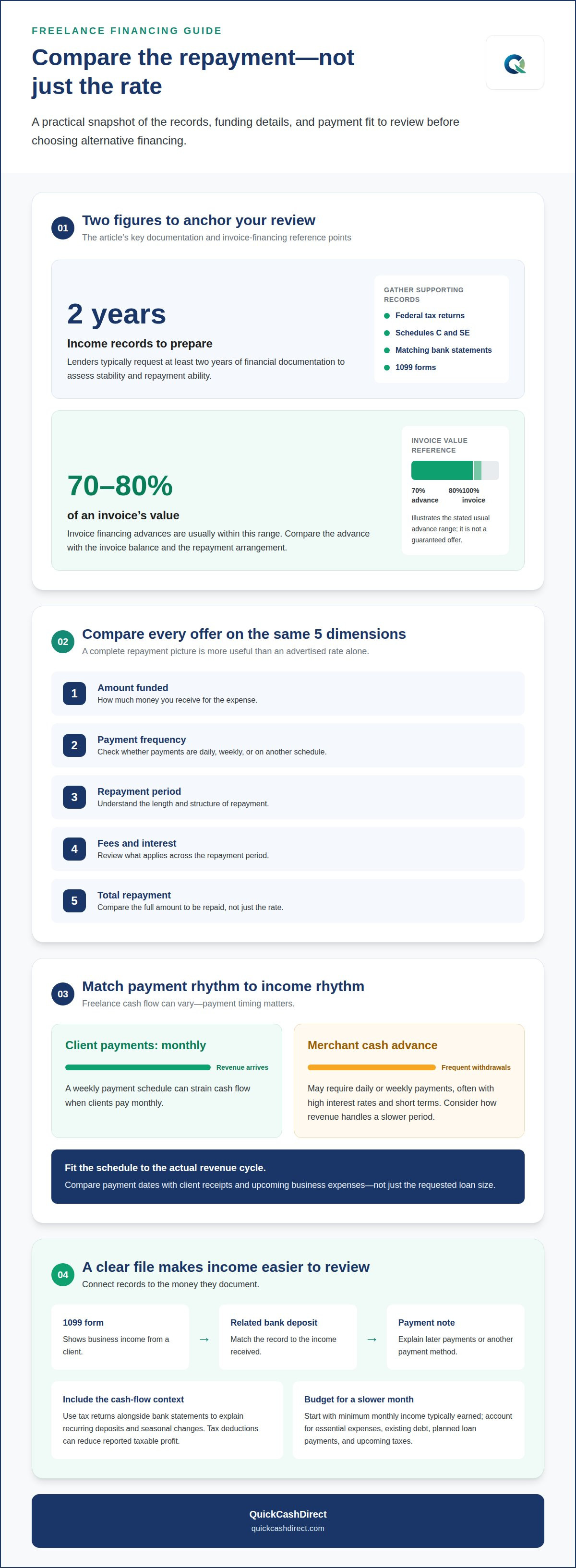
Build an application file around two years of income records. Lenders typically request at least two years of financial documentation to assess stability and repayment ability. Gather federal tax returns for the last two years, including Schedules C and SE, plus matching bank statements and 1099 forms. Freelancers, gig workers, and independent contractors may use 1099s to document business income.
Match each record to the income it supports. For example, connect a client’s 1099 to the related bank deposit, then note any payment that arrived later or through another method. Keep invoices and payment records organized by tax year. Partnerships may be asked for Form 1065, while corporations may be asked for Form 1120. These records help show how business income moves through the year.
Tax deductions can reduce reported taxable profit, while expenses such as software, equipment, and marketing affect available cash. Don’t assume a low taxable figure tells the whole income story. Use tax returns alongside bank statements to explain recurring deposits and seasonal changes. Lenders assessing business loans may consider revenue, time in operation, and credit, so clear records make your income pattern easier to review.
Freelance payments can rise and fall. Build a baseline budget around the minimum monthly income you typically earn, then account for essential expenses, existing debt, and planned loan payments. This shows how much you may be able to borrow while keeping payments manageable during a slower month. Compare that amount with the proposed payment and interest rate, not just the requested loan size.
Borrowing adds a repayment obligation even if client work slows. Freelancers may owe federal and state income taxes, self-employment taxes, and quarterly estimated tax payments. Keep tax funds separate from loan proceeds, and include upcoming tax payments in your budget. This helps prevent business cash flow from being committed twice, first to taxes and then to loan repayment.
3. Comparing alternative lender requirements, rates, and terms
Compare the full repayment structure, not just the advertised interest rate. Put the amount funded, payment frequency, repayment period, fees, and total repayment side by side. A lower rate, for example, can still strain cash flow if payments are weekly but clients pay monthly. Match the schedule to your actual revenue cycle and upcoming business expenses.
Alternative funding can work differently by product. Invoice financing advances are usually 70-80% of an invoice’s value, so compare the advance with the invoice balance and repayment arrangement. Merchant cash advances may require daily or weekly payments and often carry high interest rates with short terms. Check whether your revenue can handle those frequent withdrawals during a slow period.
Qualification factors vary by lender. For a freelance business loan, lenders may consider credit score, time in operation, and revenue. A guarantor loan can add another person’s credit record to the application, but may carry higher interest rates and fees than some other loan types. Weigh the added cost against the funding need before involving a guarantor.
Prepare a consistent comparison before applying. Organize business administration records, income statements, current debt payments, and details of the expense the funding will cover. Then compare each offer using the same questions:
- What payment schedule fits client payment dates?
- Does the agreement use a fixed term or depend on sales?
- What fees and interest apply over the repayment period?
- Does the lender require collateral or a guarantor?
Choose flexibility only when the agreement clearly explains how it works. A line of credit may suit recurring expenses, while a fixed-term loan can match a defined purchase. Compare the available amount with the cost and timing of the opportunity. Borrow only what the business need supports, and confirm the payment plan fits conservative revenue projections.
4. Personal loans for freelancers
A personal loan can provide a freelancer with capital for an individual expense or planned purchase. Unlike a business loan, it’s borrowed in your personal capacity, so lenders may focus on personal income, credit history, and existing debt. Personal loans are unsecured, which means borrowers don’t provide collateral. That can help people without business assets, but repayment still comes from personal finances.
Identify the purpose before applying. Replacing a home appliance, for example, is a personal expense, while buying equipment for client work serves the business. A personal loan may cover different needs, but using personal borrowing for business costs can make tax and bookkeeping records harder to interpret. Record how you use the funds and keep business transactions separate from household spending.
Compare the annual percentage rate, payment schedule, and total repayment. The example in this article uses an 11.99% APR. Treat that as an example, not a quote for your application. Your credit score, income, current debt, and loan terms influence the offer. A longer repayment period can lower each payment while extending the time interest accrues.
Before signing, compare the payment with a conservative monthly budget. If freelance income dips, rent, taxes, and loan payments still compete for cash. Check that the payment fits your baseline income after essential expenses. Don’t borrow extra simply because a lender approves a larger amount. Choose an amount tied to a defined need, then review any fees and early-payment terms in the agreement.
A guarantor may strengthen an application, but they take on risk. If you default, the guarantor may be liable for losses. Discuss the obligation clearly before involving someone else, and compare the loan’s total cost with other funding options. If bad credit limits your choices, explore loans for bad credit as a separate borrowing option. Keep the key distinction clear: personal loans are unsecured, but unsecured borrowing still creates a repayment obligation.
QuickCashDirect
QuickCashDirect provides access to short-term financial options for people facing an immediate cash need. Its offerings include payday loans, cash advances, payday loans online, and loans for bad credit. These options may suit a temporary personal shortfall, but they aren’t a substitute for business financing designed for longer-term investment or growth.
Before choosing any short-term loan, identify the expense and review the repayment schedule alongside your freelance income. Make sure the payment fits your budget after essential bills and tax obligations. If your need is personal and short term, consider whether one of these options fits your situation and the terms you’re prepared to accept.
Contact QuickCashDirect to discuss your borrowing needs.
Set Your Next Financing Step
Make your next financing decision serve a clear milestone, not just an urgent moment. Before borrowing, define what the funds need to accomplish and how repayment fits your expected cash flow. That plan can help you distinguish useful capital from debt that adds pressure without moving your work forward.
Financing for freelance workers works best when the borrowing choice reflects both the purpose and the repayment plan. Keep the decision practical: choose an amount tied to a real need and leave room in your budget for slower periods. If your need is personal and short term, focus on options designed for that situation rather than treating them as a substitute for long-term business funding.
Ready to discuss your immediate borrowing needs? Contact QuickCashDirect today. Take the next step with a clear purpose and a repayment plan you can manage.
Frequently Asked Questions
What am I able to use the loan for?
Use loan funds for a purpose allowed by the agreement, such as a personal bill or a defined business expense. A freelancer might need to replace a work laptop, cover a gap before a client pays, or handle an unexpected household cost. Keep personal and business spending separate in your records so you can track where borrowed money goes.
What are self-employed loans?
Self-employed loans are borrowing options for people who earn income through freelance work, contracting, or a business rather than a traditional salary. They may be personal or business loans. Lenders assess factors such as income, credit, business revenue, and operating history to judge repayment ability. The label doesn’t determine the permitted use, so review the agreement’s purpose and terms.
What business loans are available to freelancers and self-employed workers?
Options include term loans, business lines of credit, equipment financing, and SBA-backed loans. SBA 7(a) loans come through financial institutions, while SBA microloans are available through intermediaries. Invoice factoring is another way to access cash from unpaid invoices, though it involves selling invoices rather than taking a standard loan. Match the funding structure to the expense and cash-flow need.
Can freelancers get financing with irregular income or limited business history?
Yes, lenders can assess freelancers with changing income, but they may weigh revenue, credit history, and time in operation. Show the pattern behind uneven deposits, such as recurring projects followed by scheduled client payments. Build a repayment budget around a lower-earning month rather than your best month. This helps show whether a proposed payment fits your usual cash flow.
How do lenders verify freelance income, and which tax documents or bank statements are required?
Lenders may review tax returns, bank statements, and client income forms together to understand earnings over time. Prepare federal returns for the last two years, including Schedules C and SE, plus corresponding bank statements and 1099s. Keep invoices or deposit records available to explain differences between reported income and account activity. Partnerships may use Form 1065; corporations may use Form 1120.
How do personal loans, business loans, credit cards, lines of credit, and invoice financing compare for freelancers?
A personal loan can cover personal expenses without collateral; a business loan funds business needs under its agreement. A line of credit provides access to funds as needed, while invoice financing advances cash against unpaid invoices. A credit card can cover purchases, but a cash advance may accrue interest from the transaction date and include a service fee. Compare payment timing and total cost.