
A bankruptcy filing doesn’t automatically close the door to borrowing. Emergency loans after bankruptcy may be available, and a better chance of getting a personal loan from a U.S. bank or online lender may come 1-2 years after bankruptcy. Lenders also weigh income and debt compared with income.
When an expense can’t wait, it’s natural to look for a fast answer. But loan options can change based on whether you filed Chapter 7 or Chapter 13 and where you are in the process. The type of loan matters, too, especially when comparing repayment terms and total borrowing costs.
This guide explains when a personal loan may be possible and how bankruptcy type and timing can affect your options. You’ll also learn what lenders may consider, how payday, peer-to-peer, and tribal loans differ, and what to weigh before choosing a short-term solution. Get a clear view of the trade-offs before you decide what fits your immediate need and repayment capacity.
Key Takeaways
- Understand how discharge timing, income, and debt obligations can shape personal loan eligibility.
- Learn how Chapter 7 and Chapter 13 may affect borrowing differently while a case is active or after it ends.
- Assess the speed and repayment trade-offs of same-day loans before choosing an option.
- Compare payday, peer-to-peer, and tribal borrowing carefully, focusing on the total repayment obligation.
Can You Get a Personal Loan After Bankruptcy?
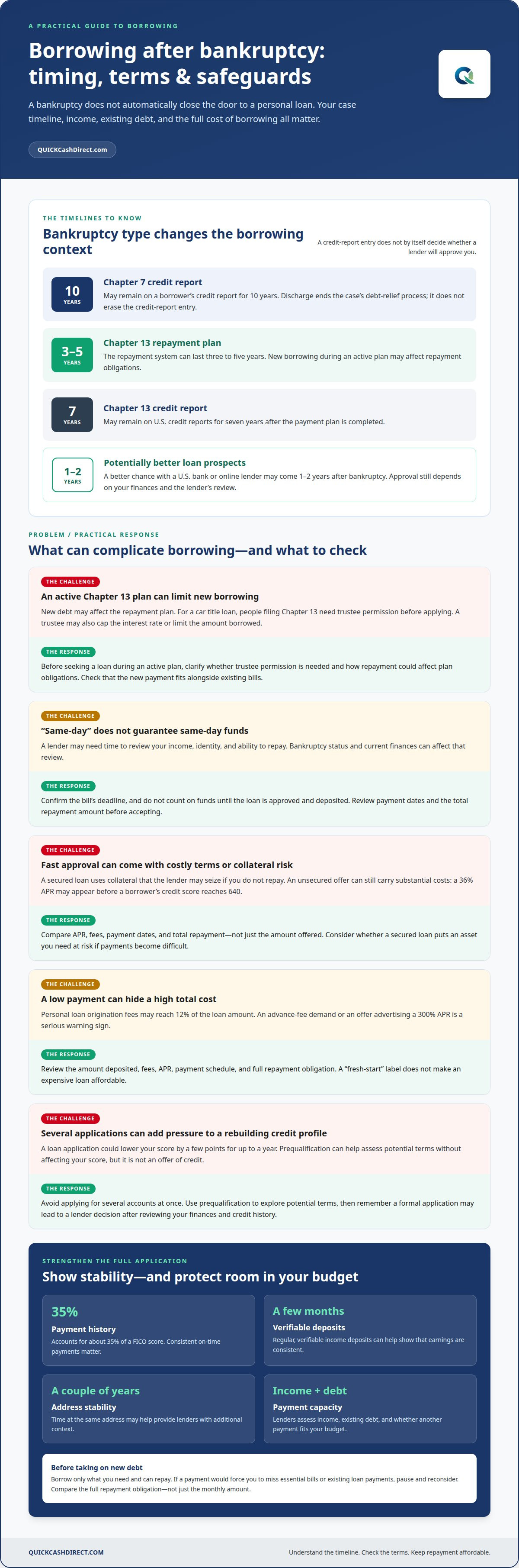
Yes. A bankruptcy doesn’t automatically prevent you from getting a personal loan after discharge. You may have a better chance with a U.S. bank or online lender 1-2 years after bankruptcy, but approval depends on more than time. Lenders also assess income, existing debt, and whether payments fit your budget.
Strengthen an application with evidence of financial stability. A good income and a low debt-to-income ratio can help offset bankruptcy. Regular, verifiable income deposits for a few months can show that earnings are consistent. A couple of years at the same address may also help offset a recent bankruptcy discharge. These details don’t erase the filing, but they give lenders more context than a credit score alone.
Credit rebuilding can support a future application. Payment history accounts for about 35% of a FICO score, so consistent on-time payments matter. A credit card or secured loan may help establish recent payment activity, provided the payments fit your budget. Avoid applying for several accounts at once: a loan application could lower your score by a few points for up to a year.
Before applying, review the full loan terms, not just the payment amount. Personal loan origination fees may reach 12% of the loan amount, depending on the lender. Treat an advance-fee demand or an offer advertising a 300% APR as a serious warning sign. A fresh-start label doesn’t make an expensive loan affordable. Compare the amount deposited, fees, APR, payment schedule, and total repayment obligation before accepting.
For emergency loans after bankruptcy, timing and affordability both matter. Apply when your income is documented and your current debt leaves room for another payment. If a payment would force you to miss essential bills or existing loan payments, pause before borrowing. Borrowing only what you need and having a clear repayment plan can help limit added pressure while you rebuild your finances.
Personal loans after Chapter 7 or Chapter 13 bankruptcy
The chapter you filed affects the timeline and conditions for borrowing. Chapter 7 bankruptcy stays on a borrower’s credit report for 10 years, according to the Federal Trade Commission. That reporting period doesn’t automatically prevent a personal loan, but lenders can still see the bankruptcy when reviewing an application. A discharge ends the bankruptcy case’s debt-relief process; it doesn’t erase the credit-report entry.
Chapter 13 works differently. The repayment system can last three to five years, according to the United States Code. During that period, new borrowing may affect the repayment plan, so don’t treat an application like ordinary borrowing. For a car title loan, people filing Chapter 13 need permission from their trustee before applying. A Chapter 13 trustee may also cap the interest rate or limit how much a borrower can take out.
Credit-report timing differs, too. A Chapter 13 bankruptcy may remain on U.S. credit reports for seven years after the payment plan is completed. The case type and its progress therefore matter when deciding whether to apply. A lender can consider the bankruptcy alongside current income, debt obligations, and recent payment behavior. Stronger evidence of stable finances can help explain how a new payment fits your budget, but it doesn’t remove the record.
Before seeking a loan during an active Chapter 13 plan, clarify whether the borrowing needs trustee permission and how repayment could affect plan obligations. After discharge, focus on whether the proposed payment fits alongside existing bills. Compare interest rates, fees, and repayment schedules, not just the amount offered. A smaller loan may be easier to manage than borrowing more than the immediate expense requires. These checks help you assess whether you can qualify without taking on a payment that strains your finances.
Same-day personal loans after bankruptcy
A same-day application doesn’t guarantee same-day funding. Lenders may need time to review your income, identity, and ability to repay before making a decision. Your bankruptcy status and current finances may also affect the review. If an urgent bill is due today, confirm its deadline and don’t count on funds until the loan is approved and deposited.
Personal loans may be secured or unsecured. A secured loan uses collateral, and the lender may seize that asset if you don’t repay. An unsecured loan doesn’t use collateral, but a bankruptcy record can affect approval and terms. Before accepting either option, check the APR, fees, payment dates, and total repayment amount. A 36% APR can appear on an unsecured offer before a borrower’s credit score reaches 640.
Prequalification can help you assess potential terms without affecting your credit score, but it isn’t an offer of credit. A formal application may lead to a lender’s decision after reviewing your income, existing obligations, and credit history. Make sure the scheduled repayment fits your budget. A payment that competes with rent, utilities, or Chapter 13 plan obligations can create further strain.
Consider alternatives before taking a same-day loan. An installment loan may allow more time to repay than a short-term advance, but approval and terms still depend on the lender. If you’re rebuilding credit, borrowing only what you can repay and making payments on time can help keep new debt manageable. Compare payment dates and the full repayment obligation before choosing.
Payday, peer-to-peer, and tribal loans
Yes. Some payday lenders, peer-to-peer platforms, tribal lenders, and online lenders may consider applicants whose credit reports show bankruptcy. The loan amount and terms depend on each lender’s review of income, current debt, and bankruptcy status.
Payday Loan Options
Payday loans may be available to borrowers with a bankruptcy record, but short repayment windows can make them difficult to manage. The average interest rate on a payday loan is about 400%, and repayment is typically due within two weeks. Some high-fee loans can carry an APR equivalent as high as 400%. Before accepting, review the amount received, payment due date, and total repayment obligation.
Lenders Offering Emergency Loans
Online lenders, payday lenders, peer-to-peer platforms, and tribal lenders are among the lender types that may consider applicants after bankruptcy. Some online lenders are more willing to lend to applicants with credit scores of 550 or higher. A peer-to-peer loan observed by a certified financial counselor carried a 78% interest rate. Compare each lender’s APR, fees, payment schedule, and total cost.
Tribal loans can carry interest rates of 1,800% or more. That high rate can make the total repayment far greater than the amount borrowed. If you’re in Chapter 13 bankruptcy, new borrowing may also affect your repayment plan, so consider how another payment fits alongside existing obligations.
Compare the amount deposited, APR, payment dates, and total repayment amount before deciding. A payment due before your next income arrives, for example, may be difficult to manage. Choose terms that fit your budget, not just the fastest approval or largest loan amount. If payments would leave essential bills unpaid, borrowing could deepen the strain.
QuickCashDirect: emergency loan
QuickCashDirect offers access to emergency loans, Payday Loans, Cash Advance, and Payday Loans Online. These options may suit readers who need to consider short-term borrowing after bankruptcy. Choose based on the expense, the repayment schedule, and whether the payments fit your current income. Before accepting any loan, review its terms and total repayment obligation so you understand how it may affect your budget.
A loan isn’t the right fit if repayment would put essential bills at risk. If borrowing remains a practical option, consider the available choices and the obligations attached to each. For help exploring your options, contact QuickCashDirect.
Choose a next step that fits your budget
Before taking on new debt, identify the expense and the payment you can realistically manage. A clear repayment plan can help keep an urgent bill from creating longer-term financial strain. If borrowing doesn’t fit your budget, consider whether you can delay the expense or manage it another way.
For emergency loans after bankruptcy, focus on a choice that matches both your immediate need and your ability to repay. QuickCashDirect offers Payday Loans, Cash Advance, and Payday Loans Online for people considering short-term borrowing. Review the terms carefully and move forward only when the payment schedule makes sense for your finances.
Take the next step at your pace. Contact QuickCashDirect today to explore the available options. A careful decision can help you address today’s need while protecting the progress you’re making toward financial stability.
Frequently Asked Questions
Can you borrow right away?
Possibly, but the timing depends on whether your bankruptcy case is active or discharged and what type of loan you seek. A lender may consider your income, existing payments, and ability to repay. For example, an active Chapter 13 plan can affect new borrowing, while a discharged case shifts attention toward your current finances. Don’t treat an application or prequalification as confirmed funding.
How do I restart after bankruptcy?
Start by setting a realistic monthly budget and keeping essential bills current. Review your credit reports for errors and track payments on new accounts so you can spot problems early. If you use a credit card, keep the balance within what you can repay. A steady record of manageable payments gives future lenders a clearer picture of your finances.
What if you need money right now?
Identify the bill and its deadline first. Before borrowing, consider whether the payee can arrange a payment plan or a later due date. If you pursue a loan, compare the amount deposited with the total repayment obligation and payment dates. QuickCashDirect connects borrowers with lenders; it isn’t a lender, and approval depends on lender criteria.
Can you get an emergency loan after filing for bankruptcy?
It may be possible, but an active case can affect whether and how you borrow. People undergoing Chapter 7 are typically not permitted to take out a personal loan during the case. In Chapter 13, new borrowing can interact with the repayment plan. A car title loan may require trustee permission, so identify your case status and loan type first.
How soon after Chapter 7 discharge can you qualify for a personal loan?
There’s no single waiting period that guarantees qualification. A better chance with a U.S. bank or online lender may come 1-2 years after bankruptcy, but lenders also assess current income, debt, and payment behavior. For example, someone with stable earnings and room in their budget may present a stronger application than someone whose new payment would strain essential expenses.
How soon after Chapter 13 filing or discharge can you get a loan?
During Chapter 13, the repayment plan can last three to five years, according to the United States Code. There isn’t one universal loan-approval date tied to filing or discharge. While the case is active, consider how a new payment could affect your repayment plan. After discharge, lenders assess your finances and the proposed repayment alongside your credit history.