
What if the next loan solves this month’s shortfall but makes next month harder? When minimum payments barely reduce balances and an unexpected bill pushes you to borrow again, avoiding the cycle of debt starts with interrupting that pattern before choosing a repayment tactic.
Borrowing can feel like the only way to keep up. But taking on debt without a clear repayment plan may leave you facing the same pressure again. Spotting the warning signs early gives you more room to make informed choices.
This guide walks you through practical steps to map your bills and balances, respond to a tight budget, and prepare for surprise expenses. You’ll learn how to weigh your options before taking on more debt and build habits that can reduce the need to borrow again. Start by identifying what caused the shortfall, then make a realistic plan you can follow.
Key Takeaways
- Recognize how repeated borrowing can make essential expenses and repayments harder to manage, whatever started the financial pressure.
- Before borrowing again, identify the next due date, the size of the shortfall, and what could happen if payment is delayed.
- Compare payment arrangements and repayment approaches to find a practical next step. Neither highest-interest-first nor smallest-balance-first suits everyone.
- Use a weekly routine to map take-home income, schedule bills, protect essentials, and adjust your spending plan.
- For avoiding the cycle of debt, treat new borrowing cautiously. Review the APR, payment schedule, total repayment, and fit with your budget before accepting an offer.
Avoiding the Cycle of Debt Starts with Recognizing the Pattern
Debt trouble doesn’t always begin with overspending. A medical bill, reduced hours, car repair, or other hardship can disrupt a budget that was already tight. The important signal is what happens next: if borrowing becomes the regular way to cover essentials or repay earlier borrowing, the pressure may be turning into a pattern.
A debt cycle is repeated borrowing that leaves less money for repayment and essential expenses, making further borrowing more likely. Recognizing that pattern isn’t about blame. It’s a practical first step toward avoiding the cycle of debt and deciding what needs attention.
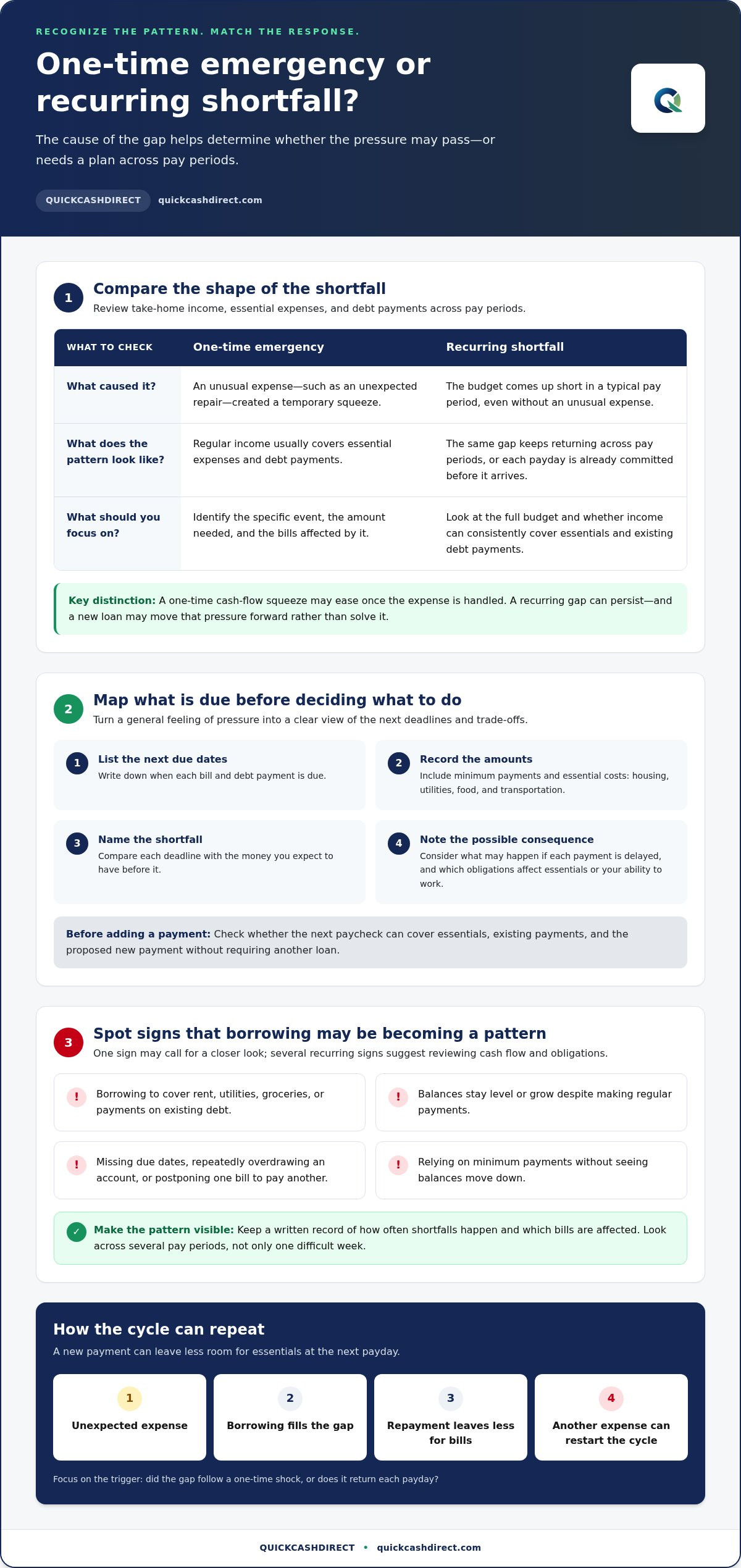
A one-time cash-flow squeeze may follow an unexpected expense and ease once the cost is handled. A recurring gap is different. If income repeatedly falls short of essential bills and debt payments, or each payday is already committed before it arrives, the pattern needs a plan. Look at what happens across several pay periods, not just one difficult week. That can help you distinguish a temporary disruption from a persistent shortfall.
What are the early signs of a debt cycle?
Use this quick checklist. One sign may call for a closer look; several recurring signs suggest it’s time to review your cash flow and obligations.
- You borrow to cover rent, utilities, groceries, or payments on existing debt.
- Your balances stay level or grow even though you make regular payments.
- You miss due dates, overdraw your account repeatedly, or postpone one bill to pay another.
- You rely on minimum payments but don’t see the balances moving down.
Track how often these events happen and which bills are affected. A written record can make the pattern easier to see than trying to remember each shortfall under pressure.
How does borrowing become a repeating pattern?
The sequence can be simple. An unexpected expense leads to borrowing. Repayment then takes a portion of the next paycheck, leaving less for groceries, utilities, or other bills. If another expense arrives before there’s room in the budget, borrowing can seem like the fastest way to fill the gap.
That relief may be brief. The new payment joins existing obligations, so the following payday has even less flexibility. A missed bill, overdraft, or delayed essential purchase can add pressure and restart the sequence. Wikipedia’s overview of understanding debt crises discusses debt crises at a broader scale. This external page is provided for general information; QuickCashDirect isn’t responsible for its content, and you use it at your own risk.
Focus on the trigger, not just the latest balance. Ask yourself whether the shortfall came from a one-time shock or whether the same gap returns each payday. That answer helps you decide whether the immediate issue is a specific expense or a budget that can’t consistently cover essentials and debt payments.
Identify the Pressure Behind the Debt Cycle Before Borrowing Again
Before taking on another payment, find out what created the shortfall. A sudden expense and a budget that falls short every month can feel equally urgent, but they call for different responses. Neither means you’ve failed. Focus on the facts you can act on now: what’s due, what money is available, and what happens if a payment is late.
Borrowing may cover an immediate gap, but it doesn’t remove a recurring one. If repayment reduces the money available from your next paycheck, the same bills may leave you short again. Pause long enough to identify the pressure before choosing a response.
Is the problem a one-time emergency or a recurring shortfall?
An unexpected repair can create a one-time squeeze, especially if your regular income usually covers essential expenses and debt payments. A recurring shortfall is different: the budget comes up short in a typical pay period, even without an unusual expense.
Review recent take-home income alongside essential expenses and debt payments. Look for a pattern across pay periods. If the gap appears only after an unusual bill, focus on that event. If it keeps returning, a one-time loan may move the pressure forward rather than solve it. Avoiding the cycle of debt starts with matching your response to the cause.
Which bills and obligations need attention first?
Make a short list before deciding what to pay or postpone. Use actual due dates and consequences, not guesswork. Different bills can carry different risks, so don’t assume every missed payment has the same impact.
- Write down the next due date for each bill and debt payment.
- Record the minimum payment and essential costs, such as housing, utilities, food, and transportation.
- Note the amount you’re short and what may happen if each payment is delayed.
- Mark which obligations affect immediate essentials or your ability to work.
Then compare the list with the money you’ll have before each deadline. Identify the next due date, the immediate shortfall, and the likely consequence of delay. This turns a general feeling of financial pressure into a specific decision. If you can’t cover a payment, contact the creditor directly before the due date when possible. Explain what you can pay and ask whether a different timing or payment arrangement is available. Don’t assume an arrangement has been made until you understand its terms.
For a recurring gap, check whether your next paycheck can cover essentials, existing payments, and any proposed new payment without requiring another loan. If you’re considering borrowing for a one-time emergency, treat it as a separate decision, not a fix for a budget that repeatedly falls short. A loan-introduction service such as QuickCashDirect is one option to evaluate only if borrowing still fits your repayment plan. Review the offer’s terms and your ability to repay before accepting.
Compare Ways to Respond Without Deepening the Debt Cycle
Choose a response by checking what it changes and what it costs over time. A payment arrangement may address an immediate due date. A payoff strategy helps direct extra money toward existing balances. New borrowing replaces or adds obligations, so it needs the closest review. For each option, compare total repayment, timing, new obligations, and whether the payments fit your actual budget.
| Option | What it may help with | What to weigh |
|---|---|---|
| Contact a creditor about timing or a payment arrangement | May help address a near-term payment problem without adding a new loan. | Ask what terms are available and how an arrangement affects due dates or amounts. Get the details before relying on it. |
| Use a payoff strategy for existing balances | Gives extra repayment money a clear target while you continue required payments. | Check whether the approach fits your priorities and leaves essentials covered. |
| Consider consolidation or other new borrowing | May combine payments or change the repayment schedule. | Compare the APR, term, payment, and total repayment. A new obligation must fit the budget without requiring more borrowing. |
Should you pay the highest-interest balance or the smallest balance first?
With the highest-interest-first approach, you make required payments on all debts and direct extra money to the balance with the highest rate. If you keep payments consistent, this may reduce interest over time. Smallest-balance-first targets the lowest balance for extra payments. Clearing it can create visible progress and motivation for some borrowers. Neither method suits everyone. Keep required payments current, then choose one target for extra money.
Make the choice sustainable. If your available extra amount changes from month to month, set a target you can maintain after accounting for essentials and upcoming bills. Avoid switching methods every time a different balance feels urgent. Review your plan when your income, expenses, or account terms change.
When can consolidation or new borrowing add risk?
Consolidation changes how you repay debt; it doesn’t erase what you owe or guarantee savings. Compare the proposed APR, repayment term, payment schedule, and total repayment against your current obligations. A lower monthly payment can still mean paying for longer or repaying more overall. Include any new fees disclosed in the agreement when calculating the full cost.
Before accepting a new loan, check whether its payment fits alongside essentials and existing obligations for the full term. If repayment depends on borrowing again, the offer may deepen the same pressure you’re trying to resolve. Treat a new loan as a separate commitment, not a debt-cycle solution by itself. For avoiding the cycle of debt, prioritize the option that addresses the immediate need without creating a payment your budget can’t reliably support.
Build a Simple Routine for Avoiding the Cycle of Debt
A workable routine doesn’t require a perfect budget. It needs to show when money arrives, what must be paid, and where pressure is building. Use take-home income and actual expenses, then review the plan often enough to catch changes before they become another shortfall. Small, repeatable checks can help you make decisions before a bill is due.
- Map cash flow. List expected take-home income by payday. Subtract essential expenses and required debt payments before assigning money to flexible spending.
- Schedule bills. Write down due dates beside paydays. Flag weeks when several bills land close together, and set reminders ahead of each payment.
- Protect essentials. Plan for housing, utilities, food, transportation, and other necessary costs first. Don’t commit money to extra debt payments if doing so leaves an essential bill uncovered.
- Review weekly. Check what cleared, what’s due next, and whether your available balance matches your plan. Adjust before a missed payment or overdraft catches you off guard.
How can you make a cash-flow plan that is realistic?
Start with income you expect to take home, not gross pay or hoped-for extra earnings. Use recent bills and spending records to estimate recurring expenses. Match due dates to paydays and identify the tightest weeks. Include irregular costs, such as annual renewals or seasonal expenses, instead of assuming every month looks the same. If an expense varies, use a realistic estimate based on what you’ve actually paid.
What safeguards can reduce repeat borrowing?
Set reminders for bills and check your account balance before scheduled payments. After essentials and required payments are covered, direct any available extra amount toward the balance you’ve chosen to focus on. For a likely repair or other irregular cost, set aside an affordable amount when possible. Keep the contribution small enough to sustain; there’s no single savings target that fits every budget.
Review your plan weekly for immediate changes, then make a fuller monthly review. Update it when income shifts, bills change, or due dates move. If the plan repeatedly shows a shortfall, adjust spending or payment timing where possible rather than assuming another loan will fix the gap. A buffer can grow gradually when your budget allows, but don’t divert money from essentials or required payments to chase a target you can’t maintain.
If borrowing remains under consideration, first confirm that repayment fits your budget and won’t leave essentials uncovered. Review potential loan options through QuickCashDirect, a loan-introduction service, and read the lender’s agreement before accepting an offer. Borrowing alone isn’t a prevention strategy; keep the cash-flow plan at the center of your next decision.
If You Still Need to Borrow, Protect Your Plan and Take the Next Step
New borrowing deserves careful review, especially if you’re already using credit to manage bills. A loan may address a specific expense, but it won’t stop a debt cycle by itself. Before accepting an offer, check whether the payment works alongside your existing obligations and essential costs. If the budget only works by borrowing again, pause and reassess.
What should you check before accepting a loan offer?
Read the lender’s agreement before you commit. Compare the APR, payment amount, repayment term, and total repayment with your current obligations. A payment that looks manageable on its own may strain your budget when combined with rent, utilities, groceries, and required debt payments.
Early payoff is generally allowed without penalty, but the specific lender agreement controls. Review its terms, including any lender-specific fees, before accepting. Don’t rely on an advertised payment alone. Check the full repayment schedule and confirm you can make each payment from expected income.
How can QuickCashDirect fit into an informed decision?
QuickCashDirect is a free loan-introduction service, not a lender. It connects applicants with lenders for online personal loans from $300 to $3,000, with terms of 3 to 36 months and an APR range of 5.99% to 35.99% for qualified consumers. Approval isn’t guaranteed. Lenders assess applications based on their criteria, income, and ability to repay.
Checking rates through QuickCashDirect uses a soft check and doesn’t affect your credit score. A hard inquiry occurs only if you accept an offer. If you review an offer, assess the lender’s agreement and your repayment plan before deciding. Don’t treat a possible loan as the answer to a recurring gap. For example, a representative $1,000 loan over 12 months has a total payback of $1,134.72 and an APR of 29.82%. The terms of any offer you receive may differ, so review the actual agreement.
QuickCashDirect does not charge an upfront fee for using its service. Any lender fees are specific to the lender and disclosed in the loan agreement. QuickCashDirect will not contact you to request money or ask you to purchase products before you receive loan funds.
Use this short checklist before taking the next step:
- Identify the expense the loan would cover and whether it’s a one-time need.
- Compare APR, scheduled payments, term, and total repayment.
- Check that payments fit after essentials and existing required payments.
- Read the lender agreement and confirm the terms you’re accepting.
Avoiding the cycle of debt means making the next decision with the full cost and budget impact in view. If borrowing still appears workable after that review, you can review the QuickCashDirect loan-introduction process as one optional route to consider. Take your time, compare the written terms, and accept an offer only if repayment fits your plan.
Make Your Next Money Decision With a Clear Plan
Progress doesn’t require solving every balance today. Choose one next step you can manage, then give yourself time to see whether it eases the pressure without creating a new shortfall. That steady approach can make avoiding the cycle of debt more achievable, even when your budget has little room to spare.
If borrowing remains necessary, compare the full repayment terms with your budget before accepting an offer. QuickCashDirect is a free loan-introduction service, not a lender. Checking rates doesn’t affect your credit score, but approval isn’t guaranteed and depends on lender criteria. Treat the process as an option to evaluate, not a substitute for a repayment plan.
Review the QuickCashDirect loan-introduction process only if borrowing still fits your needs and the repayment terms fit your budget. Take the next step at a pace that protects your essentials and future payments. Clear information and a realistic plan can help you move forward with greater confidence.
Frequently Asked Questions
What are the first signs that you are in a debt cycle?
Watch for debt payments or everyday necessities increasingly going on credit while balances fail to shrink. Compare recent statements: note each balance, the payment made, and whether new charges offset it. Also look for bills repeatedly moved to a later date or one account used to cover another. These changes can reveal pressure building before a missed payment becomes the first obvious warning.
Can a debt cycle happen even if you are not overspending?
Yes. A drop in income, a medical expense, or an essential repair can leave a careful spender short. If that shortfall keeps returning, borrowing may fill the gap temporarily while making future paychecks harder to manage. Focus on the gap between reliable income and necessary costs, not on blame. A plan should reflect what you can afford now, including any change in work hours or recurring bills.
How long does it take to break a cycle of debt?
There’s no fixed timeline. It depends on your income, balances, interest rates, essential expenses, and whether you can stop adding new debt. Instead of setting an arbitrary deadline, track practical progress: bills paid on time, fewer new charges, and balances moving down. Review those measures each month. If the numbers aren’t improving, adjust the plan rather than assuming you must keep following an approach that isn’t working.
Does paying only the minimum keep you in a debt cycle?
Not automatically, but minimum payments can make repayment take longer, particularly when interest and new charges offset what you pay. Check your statement to see how much went to interest, fees, and the balance itself. If the balance barely changes, avoid adding new charges where possible and consider directing an affordable extra amount to one debt after required payments and essentials are covered.
Can debt consolidation help you avoid borrowing again?
It can simplify several payments, but consolidation doesn’t erase debt or guarantee a lower total cost. Compare the new APR, fees, term, monthly payment, and total repayment with your current debts. Then check whether the payment fits your budget. If you consolidate, consider how you’ll avoid adding new balances to accounts you’ve paid down. Without that guardrail, consolidation may change the structure but leave the borrowing pattern in place.
Should you use savings to pay off debt or keep an emergency buffer?
There’s no single right choice. Using all available savings may reduce a balance, but could leave you with no funds for an urgent expense and lead to new borrowing. Compare the debt’s cost with upcoming essential expenses and the cash you need to manage likely disruptions. If possible, keep some accessible savings while making payments you can sustain. Revisit the balance as your income and expenses change.
Does checking loan rates affect your credit score?
Checking rates through QuickCashDirect uses a soft check and doesn’t affect your credit score. A hard inquiry occurs only if you accept an offer. QuickCashDirect is a free loan-introduction service, not a lender, and approval isn’t guaranteed. Lenders make decisions based on their criteria, including income and ability to repay. Review the proposed agreement and budget impact before accepting any offer.
QuickCashDirect’s website is provided as is, without express or implied warranties, including warranties about the accuracy, completeness, or correctness of its information. Liability is limited to the amount paid for access to the site, if any. Any dispute must be resolved individually, and class-action arbitration is waived. Check local laws for any restrictions on excluding implied warranties.